Dreaming
things up, then
running them as
living products.

I'm Lydia — a Product Designer and Design Engineer who builds, writes, and experiments at the intersection of design, systems, and emerging technology.

Explore my work →
01SenseFind the tension02PrototypeMake the hypothesis tangible03LearnTest it through real use04FrameDefine the human change05ShapeTurn intent into product06EvolveLearn from reality
PRODUCT DESIGNER✦DESIGN ENGINEER✦AI-NATIVE PRODUCTS✦SPATIAL UX✦INTERACTION✦SYSTEMS✦PROTOTYPING✦BUILD TO UNDERSTAND✦
[ 01 · WHO I AM ]
About Me

I treat product design as the work of connecting people, systems and implementation — the interesting part is rarely the surface.

I like turning abstract ideas into something you can actually use, watch and argue with, as early as possible. Most of my working time is spent moving back and forth between design, prototype, system and engineering.

dreamlydia is where I keep what I'm building, and the thinking that forms while building it.

How I Design
PROTOTYPE-LED HUMAN-CENTERED DESIGN

Design from Self → Design beyond Self.

Start from a real tension, turn the core hypothesis into a working product, and learn through real use. Then frame the human change, shape the product with intention, and let reality keep evolving it.

  1. 01 Sense
  2. 02 Prototype
  3. 03 Learn
  4. 04 Frame
  5. 05 Shape
  6. 06 Evolve
Design Principles
03 — HOW I JUDGE THE WORK
PROTOTYPE[01]
Build to ask better questions
Prototype early to surface the real questions.
CHANGE[02]
Design for human change
Good design should change how someone understands, feels or acts.
TRACE[03]
Make every decision traceable
Every important design decision should trace back to the person, the situation, and the intended change.
[ DESIGN BELIEF ]

The first prototype is a question. I build to understand, then design with intent. Design starts with who, and ends with what changes.

[ 04 · WHAT I WRITE ]
Notes
19 PUBLISHED
VIEW ALL NOTES →
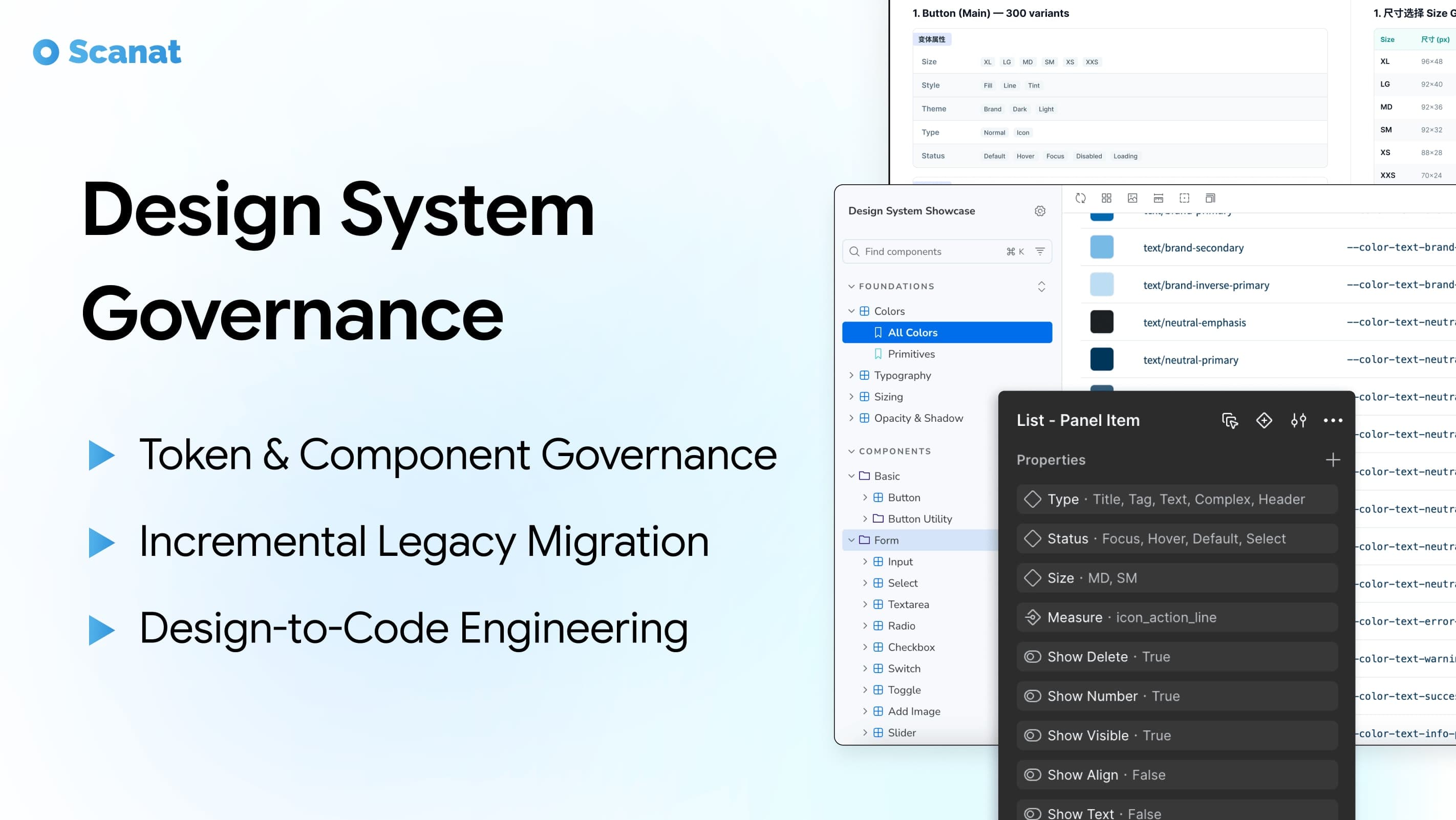
Translating Figma Component Properties into Code PropsA Figma property name is not automatically a prop name — a variant labeled Focus turned out to mean an open dropdown, and a shared Boolean meant two completely different things across variants.
figma apidesign systems
2026.09
Engineering a Figma Design System into Production AssetsTurning a Figma design system into something maintainable means three separate layers — repeatable token extraction, a delivery model that matches what the team already runs, and a validation loop that keeps all three in sync.
figma apidesign systems
2026.09
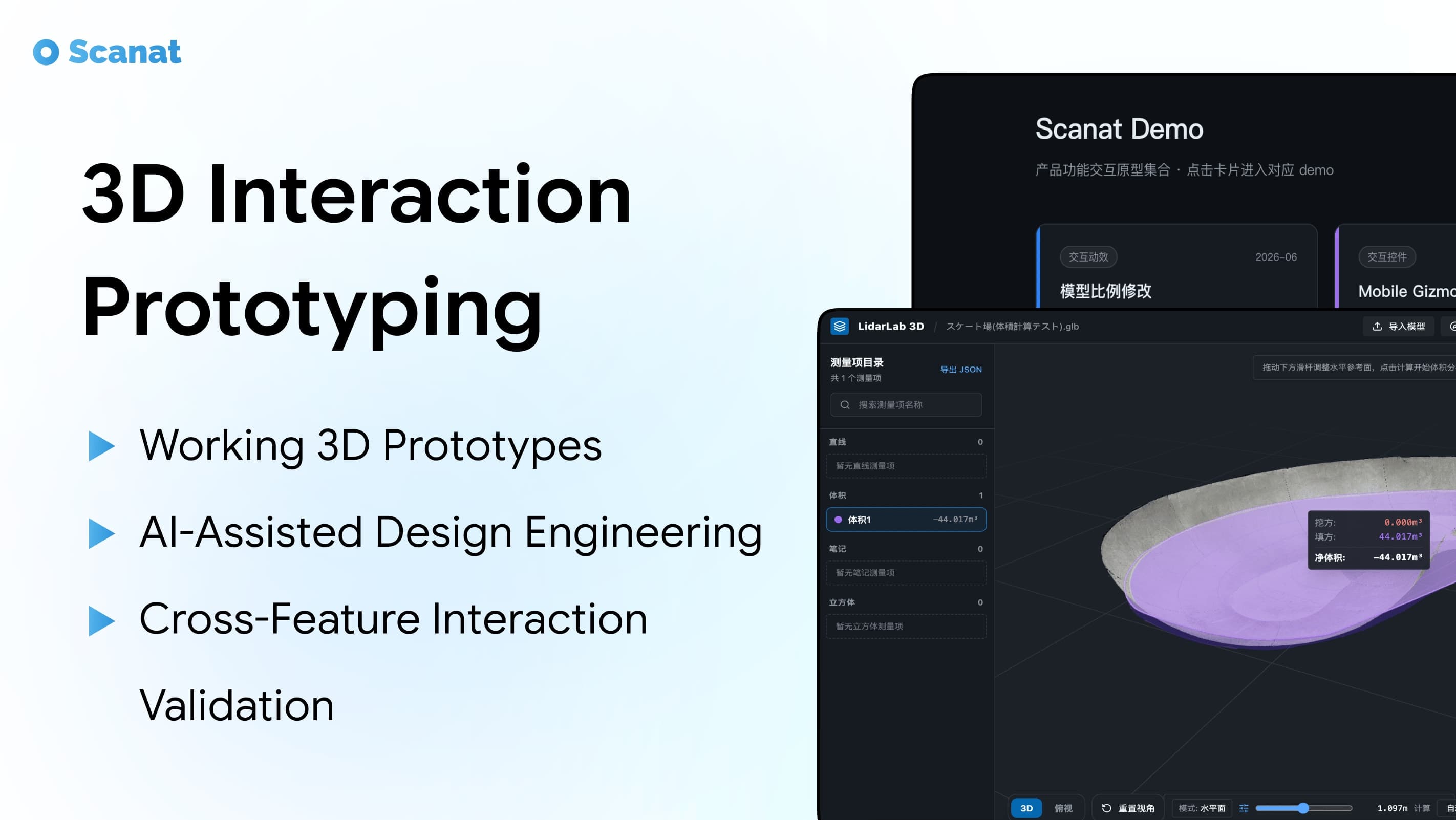
Event Binding Failures When Replacing 3D Models DynamicallySwapping in a new model left every click-based tool dead except volume measurement — the model looked fine, but the framework had reused the old component identity, so pointer events never rebuilt around the new object.
dev tools3d design
2026.09
Rendering Compatibility for User-Uploaded 3D ModelsRendering rules tuned for a fixed set of built-in models silently break on user uploads — a room scan exposed two hidden assumptions: that every face should render, and that every model needs scene lighting.
3d visualization3d design
2026.09
Choosing Fixed, Hug, and Fill for Figma ComponentsThe question isn't which sizing mode looks right — it's where the dimension actually comes from: content and padding, an external rule, or the parent container.
handoffdesign systems
2026.09
Adapting a 3D Gizmo for Desktop InteractionThe same Gizmo and picking layer carry over from touch to desktop unchanged — mouse input only adds hover, button roles, and an Escape-to-cancel on top of the existing state system.
3d visualization3d design
2026.09